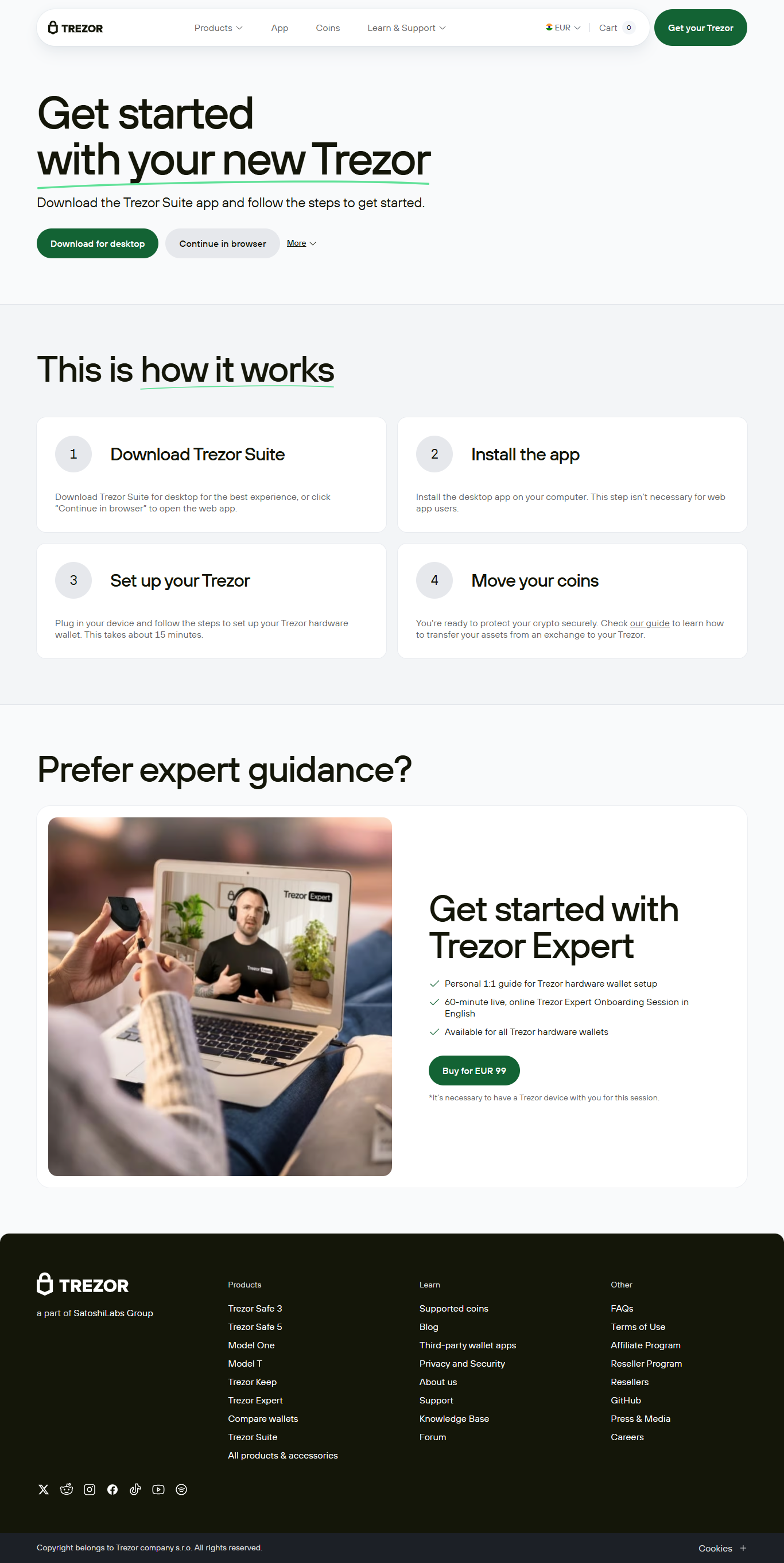
Trezor.io/Start — The Complete Beginner’s Guide to Setting Up Your Trezor Wallet
Your journey to crypto security begins here. Learn how to set up your Trezor hardware wallet using Trezor.io/start — the official gateway to securing your digital assets.
Introduction: Why Hardware Wallets Matter
In the rapidly evolving world of cryptocurrency, security isn’t just an option—it’s a necessity. While software wallets offer convenience, they’re also vulnerable to malware, phishing, and online hacks. That’s where Trezor, a hardware wallet developed by SatoshiLabs, changes the game. By storing your private keys offline, Trezor ensures your crypto remains safe from online threats. And the journey to setting it up begins at Trezor.io/start.
Whether you’ve just unboxed your Trezor Model One or Model T, this guide will walk you step-by-step through setup, security principles, backup procedures, and the essentials of managing your crypto portfolio securely.
Step 1: Visit Trezor.io/Start
Begin your setup journey by navigating to Trezor.io/start, the official onboarding page from SatoshiLabs. This page automatically detects your device model and guides you to the appropriate setup flow.
Pro Tip: Always type the URL manually—never click random links online. Scammers often create lookalike websites to steal your data or recovery seed.
Step 2: Install Trezor Suite
Once on Trezor.io/start, you’ll be prompted to download Trezor Suite—the official app for managing your crypto assets. Trezor Suite is available for Windows, macOS, and Linux, and also has a web version compatible with secure browsers like Chrome and Firefox.
💻 Desktop App
Download and install the Trezor Suite desktop app for maximum security and convenience. It allows offline management, device updates, and direct crypto transactions.
🌐 Web App
Prefer browser-based management? You can connect your device directly through the web app, though it’s recommended to use the desktop version for enhanced privacy.
Step 3: Connect Your Device
Plug in your Trezor device using the provided USB cable. Upon connection, Trezor Suite automatically detects the hardware and begins the initialization process.
- Allow Trezor Suite to recognize your device.
- Confirm connection on your Trezor’s touchscreen (for Model T) or buttons (for Model One).
- Proceed to install the latest firmware when prompted.
Step 4: Install the Latest Firmware
Firmware is the core software that powers your Trezor wallet. Installing the latest version ensures your device is protected with the newest security patches. Trezor Suite will guide you through this automatically — simply follow the on-screen prompts and confirm on your device.
During this step, make sure:
- Your device stays connected throughout the update.
- You verify the firmware signature directly on the Trezor’s screen.
Step 5: Create a New Wallet
After the firmware is installed, it’s time to create your crypto wallet. You can either generate a new wallet or recover an existing one using your recovery seed.
🆕 Create New Wallet
Select “Create New Wallet” to generate a fresh recovery seed. This unique phrase is your ultimate key to access your crypto in case you lose or reset the device.
🔑 Recover Existing Wallet
If you already have a Trezor recovery seed, choose “Recover Wallet.” Input your seed phrase carefully, following the on-device prompts for maximum safety.
Understanding Your Recovery Seed
Your recovery seed is a sequence of 12, 18, or 24 words displayed once on your Trezor’s screen. Write it down on paper and store it offline in a secure place—never take a screenshot or save it digitally.
Warning: Anyone with your recovery seed can access your crypto. Guard it as you would your most valuable asset.
Step 6: Set a Strong PIN
Next, you’ll be asked to create a PIN code for daily access to your Trezor device. This PIN acts as a local layer of protection in case your hardware wallet falls into the wrong hands.
- Choose a PIN that isn’t easily guessable.
- Don’t use repetitive or sequential numbers.
- Store it securely, but separately from your recovery seed.
Step 7: Add Your Crypto Accounts
Once your wallet is initialized, Trezor Suite allows you to add accounts for different cryptocurrencies like Bitcoin, Ethereum, Litecoin, and others. Each coin has its dedicated account within the app, ensuring organized and secure management.
| Cryptocurrency | Network | Supported in Suite |
|---|---|---|
| Bitcoin (BTC) | Mainnet | ✔️ |
| Ethereum (ETH) | ERC-20 | ✔️ |
| Litecoin (LTC) | Mainnet | ✔️ |
| Cardano (ADA) | Mainnet | ✔️ (via integration) |
Step 8: Send and Receive Crypto Securely
With accounts added, you can now transact safely. To receive crypto, select the account, click “Receive,” and verify the address displayed on your Trezor device. Always confirm the address matches between your device screen and Trezor Suite.
When sending crypto, double-check the recipient’s address and transaction fees. Your Trezor will require confirmation directly on its screen before broadcasting the transaction—adding a vital layer of protection.
Advanced Features in Trezor Suite
- Portfolio Overview: Track your entire crypto portfolio in real-time.
- Exchange Integration: Swap assets within Trezor Suite without leaving the interface.
- Tor Integration: Enable Tor for anonymous and private transactions.
- Labeling: Add labels and notes to transactions for better tracking.
Frequently Asked Questions (FAQ)
1. Is Trezor.io/start safe to use?
Yes. As long as you manually enter the URL and ensure you’re on the official website, Trezor.io/start is 100% legitimate and secure for device setup.
2. What should I do if I lose my Trezor device?
You can recover your funds on a new device using your recovery seed. That’s why keeping your seed secure is crucial.
3. Can I manage NFTs using Trezor?
Yes, Ethereum-based NFTs can be managed via third-party integrations that connect with Trezor Suite, keeping your assets protected offline.
4. What’s the difference between Trezor Model One and Model T?
Model One is ideal for beginners, while Model T offers a touchscreen, advanced firmware, and broader coin support for experienced users.
“Owning crypto means owning your freedom. Protecting it means owning a Trezor.”
Conclusion: Your Gateway to True Crypto Security
Setting up your Trezor wallet via Trezor.io/start is the smartest move you can make as a crypto holder. It bridges convenience and security, ensuring that your digital wealth stays immune to online vulnerabilities.
Whether you’re holding Bitcoin, Ethereum, or multiple altcoins, your Trezor device acts as your personal vault—simple to use, nearly impossible to hack. With Trezor Suite, you gain intuitive portfolio management and complete control over your assets.
Remember: The key to crypto safety lies in awareness. Always begin your setup at the official Trezor.io/start and safeguard your recovery seed. Your financial independence deserves nothing less.